
A small business can be better than a big business because of agility and adaptability due to their size and scale.
Losangle, Street Road 24, New York, USA - 67452
A small business can be better than a big business because of agility and adaptability due to their size and scale.
Losangle, Street Road 24, New York, USA - 67452
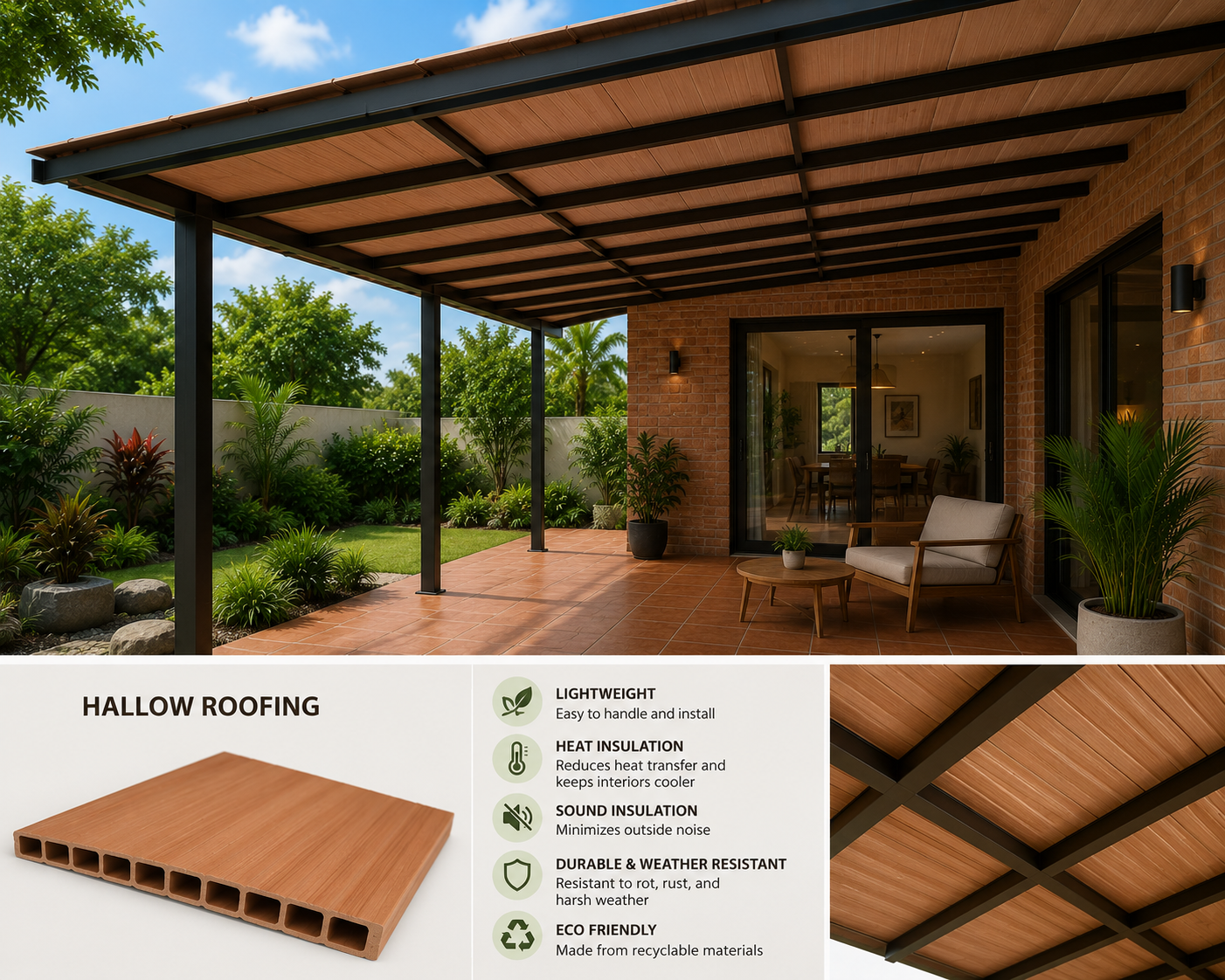



Hollow roofing is an innovative construction technique that uses hollow blocks or pots to create lightweight, cost-effective roof slabs. This method involves placing hollow clay or concrete units between reinforcement beams before pouring concrete, creating a ribbed slab structure with air cavities that significantly reduces the amount of concrete and steel required compared to solid slab construction. The result is a strong, durable roof that is lighter and more economical.
The air cavities within hollow roofing provide excellent thermal insulation, keeping buildings cooler by reducing heat transfer through the roof, which is responsible for the majority of heat gain in buildings. This natural insulation reduces the need for air conditioning and lowers energy bills throughout the life of the building. The cavities also improve acoustic insulation, reducing noise transmission from rain, foot traffic, and external sources.
Hollow roofing systems are available in two main types: clay filler pots and concrete hollow blocks. Clay filler pots are traditional fired clay units that offer natural thermal mass and breathability, ideal for warmer climates. Concrete hollow blocks provide higher structural strength and are suitable for larger spans and heavier loads. Both systems are designed to work seamlessly with standard reinforced concrete construction methods.
This roofing method is particularly popular for multi-story residential buildings, schools, hospitals, and commercial structures where cost efficiency and thermal performance are priorities. The reduced weight also allows for longer spans between columns, providing greater design flexibility for open-plan spaces. Installation is faster than traditional solid slab construction, reducing overall project timelines and labor costs.